

Section _ Understanding (Darlington transistor ) or Darlington pair
Performance (threshold voltage or net voltage) in Darlington transistor = even or even
Researcher and Author: Dr. ( Afshin Rashid)
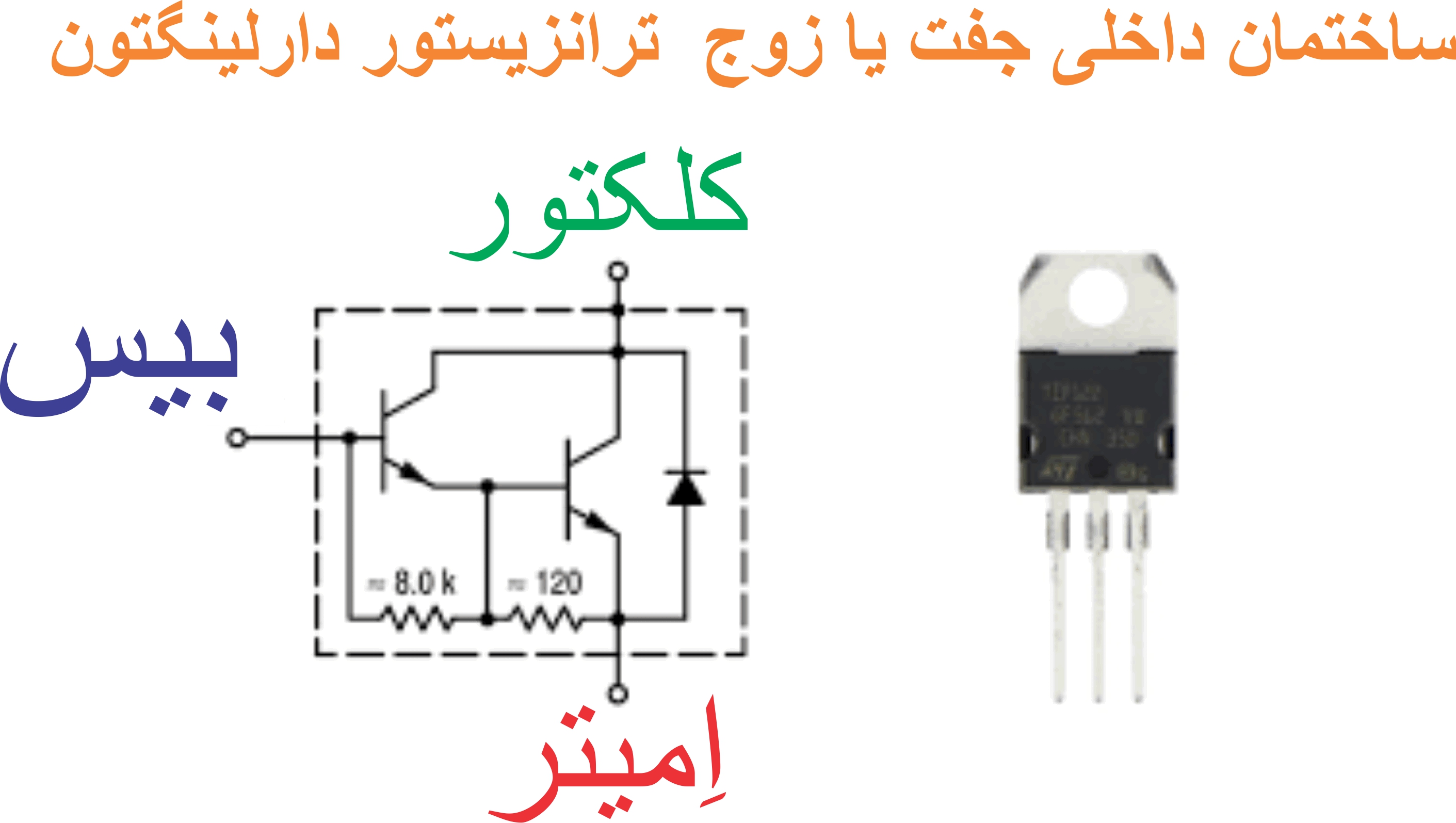
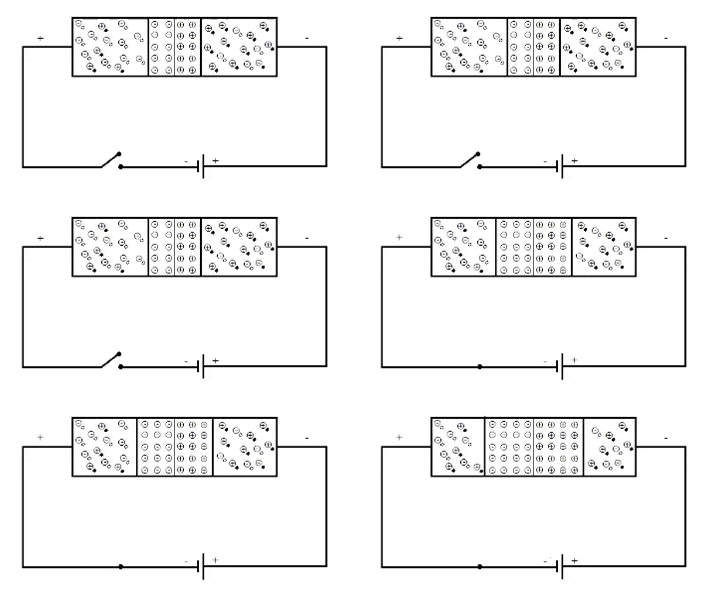
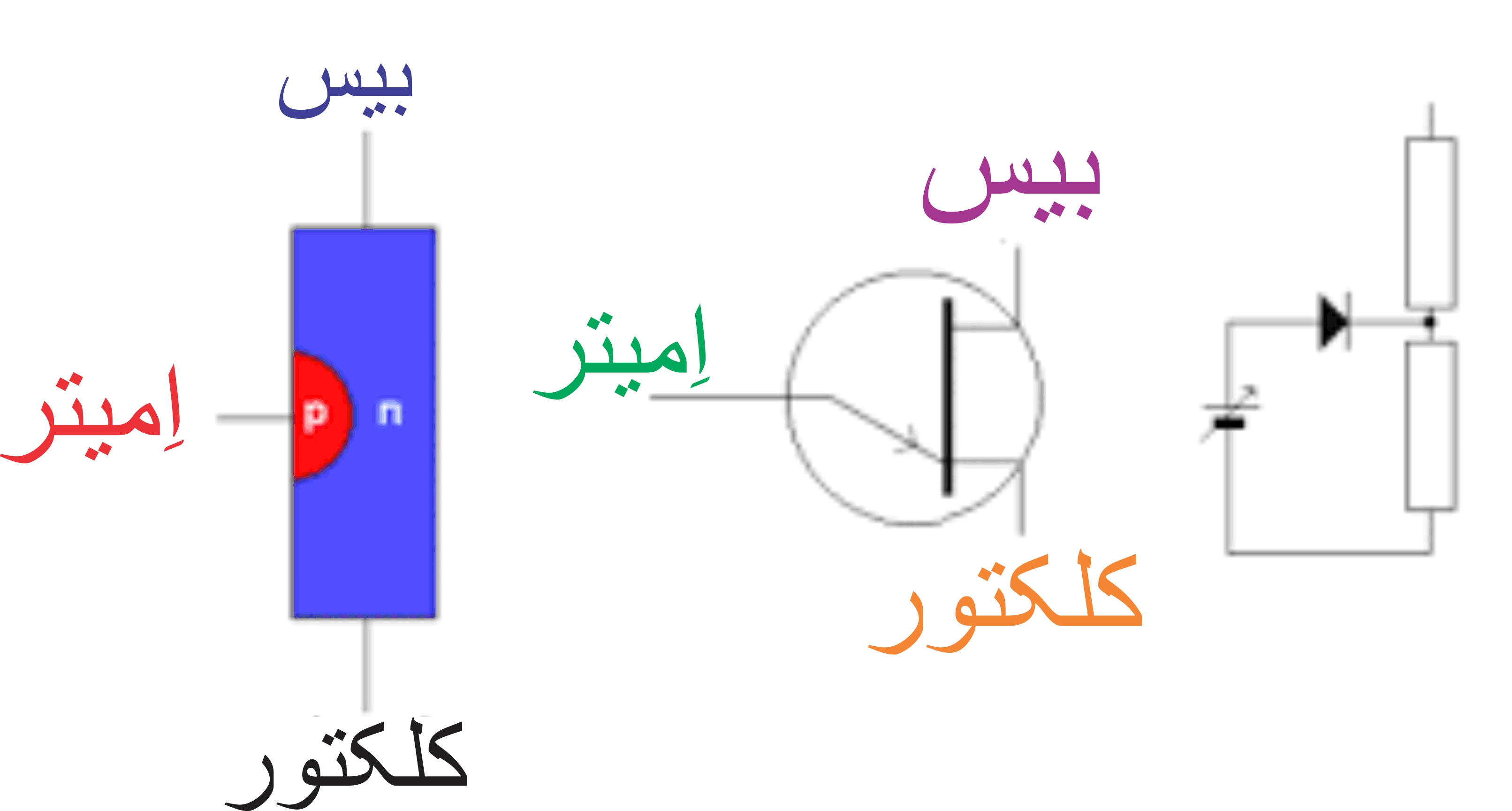
In the internal structure of a Darlington transistor pair, note that the gate function is the programmable part of the Darlington transistor pair . By choosing a voltage for the gate, we can set the threshold point at which current begins to flow and the Darlington transistor pair begins to conduct. The single-junction transistor is listed as obsolete (if it exists, it is expensive), but the Darlington transistor pair still exists. It is cheap and in production. Although it has the same performance as the single-junction transistor.
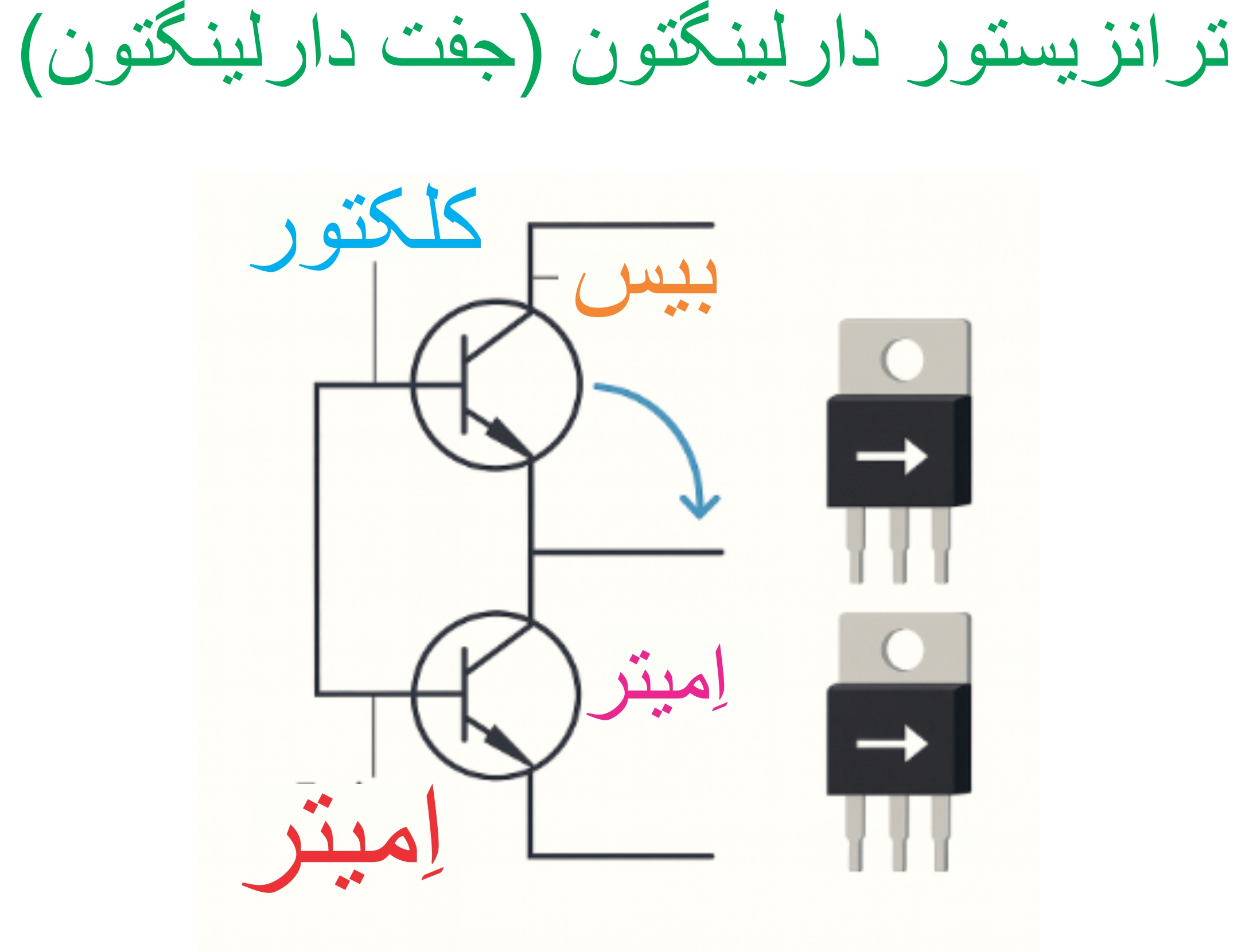
Darlington pair as a transistor:
A Darlington pair can be used as a transistor with a large β in emitter follower circuits. Darlington pairs with β of about 30000 are commercially available on integrated circuits. An example of such a transistor is the MJ1000. The MJ1000 is a power Darlington transistor with a β of about 1000, a current-carrying capability of 10 A, and a collector-emitter voltage tolerance of up to 80 V.
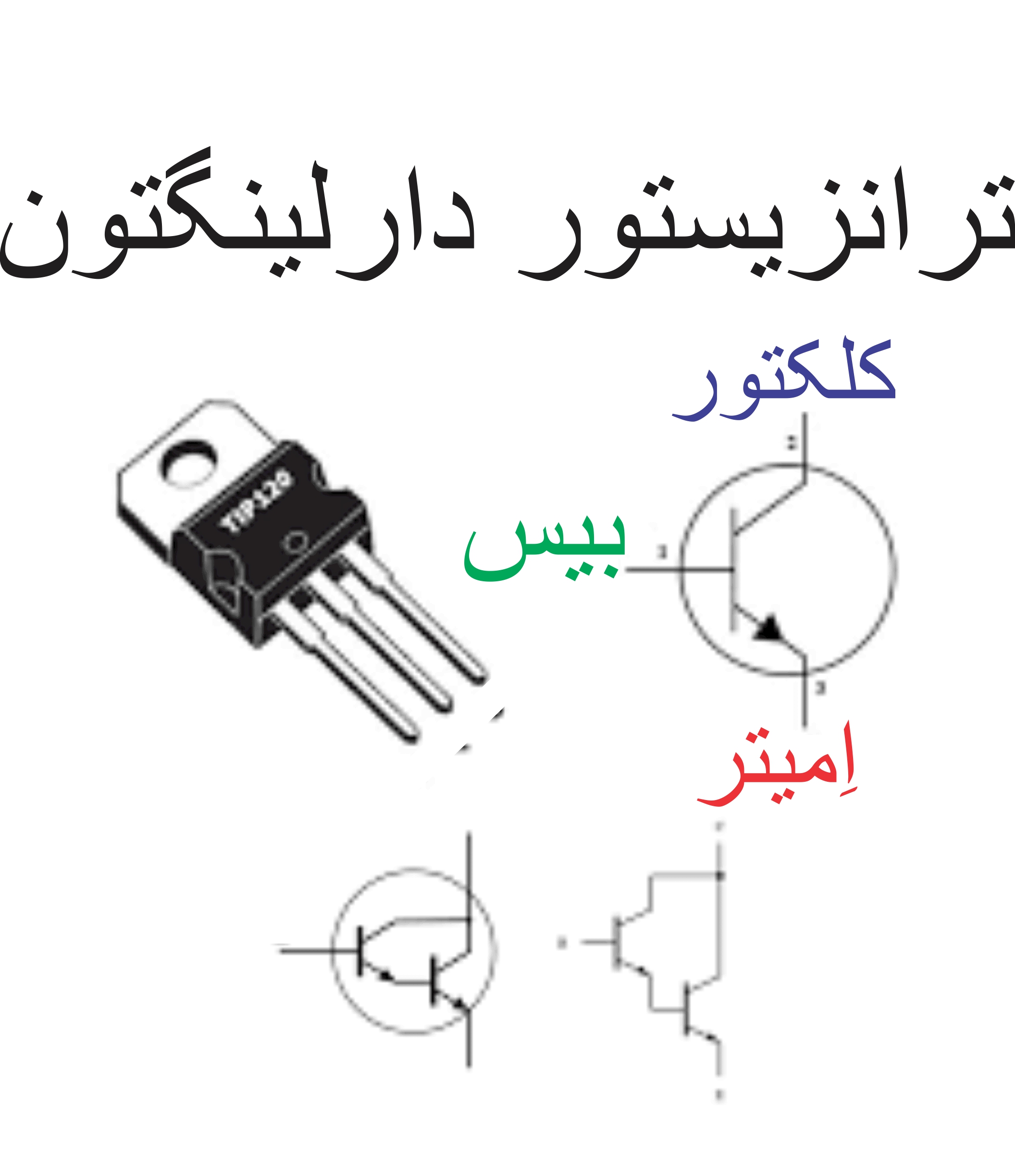
The voltage that causes a Darlington transistor pair to start conducting is called the threshold voltage, which is from 0.2 volts to 1.5 volts depending on the type of Darlington transistor pair . However, when a reverse voltage is applied (+ to the emitter and - to the gate, which is called reverse bias), almost no current flows through it. In general, in electronics, placing a circuit element (such as a Darlington transistor pair , etc.) in its operating region is called biasing.
_gi93.gif)
A Darlington transistor pair is a semiconductor device based on the basic diode type of single-junction transistor. The Darlington transistor pair has many similarities, but also significant differences that allow it to be used in a wider range of applications.
Researcher and Author: Dr. ( Afshin Rashid)