

_ Department (Nano and Micro Electromechanical MEMS )
Investigation of the ( nano - electro-mechanical) process in micro-nano-electromechanical systems (BioMEMS)
Researcher and author: Dr. ( Afshin Rashid)


Note: The creative use of nano-microelectronic systems and (MEMS nano-electromechanical systems) in nano-bioelectronic sensor applications has provided favorable conditions for (Nano NEMS) to accurately and accurately detect environmental factors .
The use of nanotechnology in nanobiosensor applications has facilitated the control and fine-tuning of nanoenvironmental functions . Nanostructures are widely used in the field of nanobiosensors due to their small size in the nanometer range and multiple functions in specific locations . Various types of multifunctional MEMS/NEMS devices with micro- and nanoelectronic features for biomedical applications (BioMEMS/BioNEMS ) have been developed through various fabrication techniques and biocompatible nanomaterials. However, the integration of the devices with the physiological environment of nanobiosensors is a major challenge. Most of them lose their performance due to the limitations of nanoparticle in nanobiosensors and cause undesirable effects. In vitro and in bioenvironmental nanosensor applications, the performance of Bio MEMS implants such as biosensors, smart stents , etc., as well as the interaction of these devices with the physiological environment of the nanobiosensors and biocompatible BioMEMS are essential for the development of the structure and architecture of nanobiosensors.
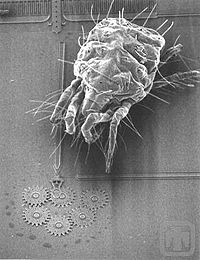
Micro-nanoelectromechanical systems (BioNEMS) and (BioMEMS) are very useful smart surfaces, in that using nanotechnology and various polymer materials or molecules, their surface can be modified and, ultimately, the complications can be reduced and the device performance improved inside the nanobiosensors and in environmental conditions . Nanoporous coatings are used for applications in, electrodes made of carbon nanotubes (CNTs) in electrochemical nanobiosensors that have been modified by nanowires and nanoparticles and nanoparticles that are used in optical nanobiosensors. The use of nanoporous coatings such as nanocarbons (diamonds coated with aluminum) and alumina makes nanobiosensors resistant to adverse environmental effects. On the other hand, silicon nanoarrays as nanobiosensors are widely used in MEMS technologies due to their ease of fabrication.

Conclusion:
New analytical tools are able to explore the nanometer world to determine the nanoelectrochemical and mechanical properties of micro-nanoelectromechanical systems (BioNEMS) and (BioMEMS), discover new phenomena and processes, and provide knowledge with a wide range of tools, materials, devices, and systems with unique properties. Nanobiosensors are widely used in many general, industrial, and specialized fields. However, the development of diagnostic methods based on nanodevices is still a challenge. Rapid and accurate detection requires nanobiosensors with low energy consumption and fast reactions, increased selectivity, and sensitivity. Undoubtedly, each of these parameters requires further advances through the development of nanomaterial synthesis and the integration of different techniques.