

_ Nanoelectronics and Plasmonic Particles Department
Nanoelectronic devices and conduction in plasmonic nanoparticles
Researcher and Author: Dr. ( Afshin Rashid)


Note: The division of this emerging science into two areas: localized surface plasmons and surface plasmon polaritons, each of which is briefly introduced.
In localized surface plasmons, the basis of interactions is nanoparticles, whose properties in exciting this mode of plasmonic waves have been studied. In surface plasmon polaritons, by introducing their working principle, there is a field formulation and how these structures can overcome the diffraction limit. With the technological approach towards the accumulation of optoelectronic circuits, the problems of manufacturing and the phenomena that helped prevent further compression of the structure, caused the use of plasmonic structures and plasmonic waves to be investigated and used. These nanostructures consist of metal and dielectric, whose dimensions are below the excitation wavelength (the wavelength of the radiation that excites the plasmonic waves).
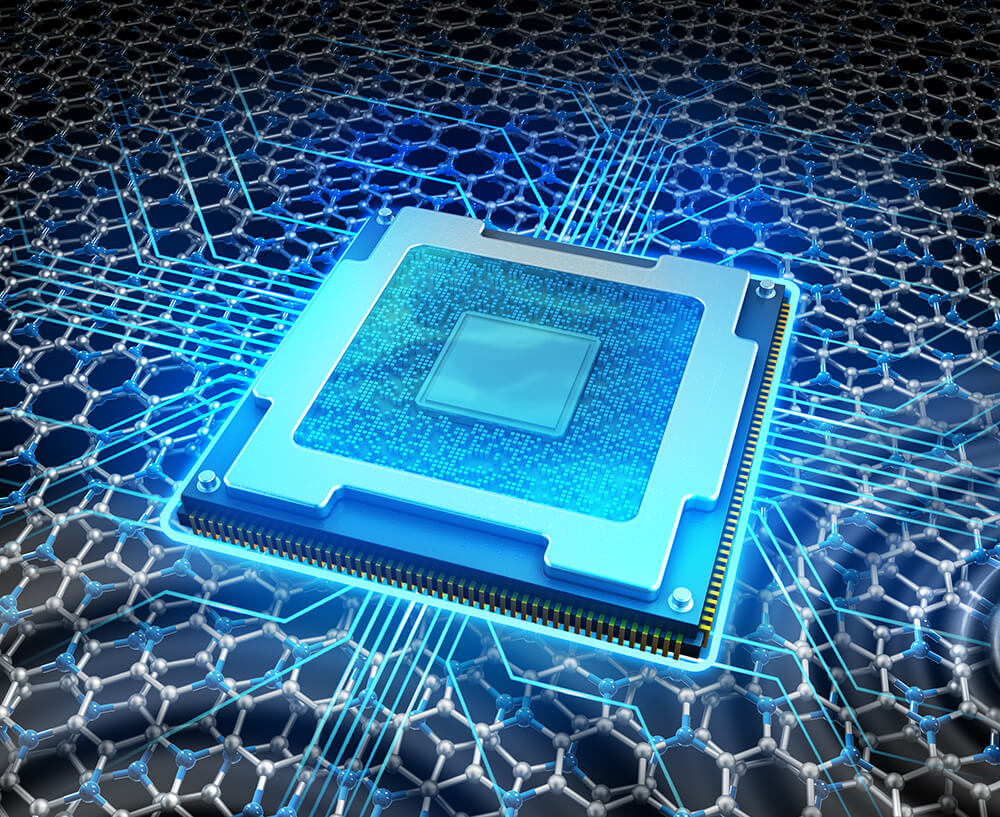
Plasmonic is based on the interaction process between electromagnetic waves and conduction electrons in metals with nano-sized dimensions. Analytically, the reason for the rapid energy drop of electrons passing through metals is that this energy is spent on the collective and oscillatory motion of free electrons in the metal and he called it plasmon. The reason for this naming was the similarity of these electron oscillations with the oscillations of particles in the plasma environment. The term polariton is used for the oscillation of bound electrons in the metal in a state of coupling with phonons of the incident beam. The name polariton was used for quasi-particles that were half matter and half photons, which is the coupled state between a photon of the primary excitation beam and the conduction electrons of the metal, and the term plasmon polariton is used to express the coupling between a photon and a plasmon.
Conclusion:
The division of this emerging science into two areas: localized surface plasmons and surface plasmon polaritons, each of which is briefly introduced.
Researcher and Author: Dr. ( Afshin Rashid)
Specialized PhD in Nano-Microelectronics