

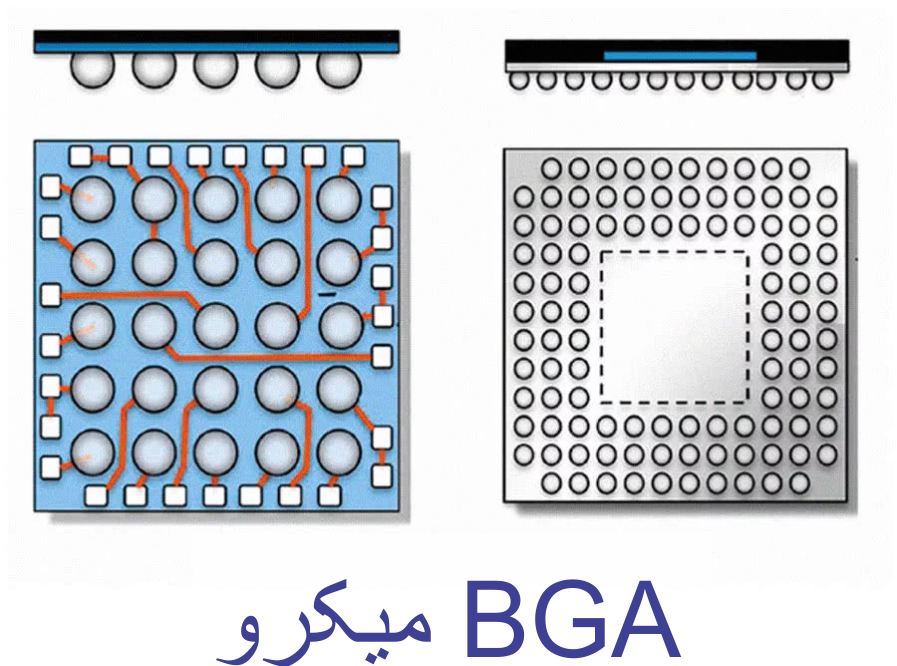
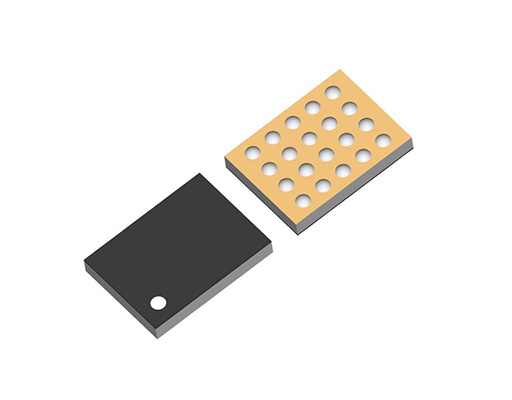
_ Understanding ( Micro BGA ICs) or (Micro Ball Base)
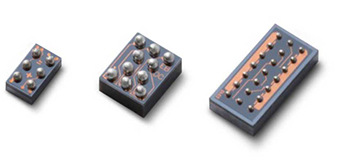
Review and recognition of (micro BGA or micro ball base) of WLP / CSP type (a type of micro BGA processor)
Researcher and Author: Dr. ( Afshin Rashid)
Note: The CPU, or Central Processing Unit , is the most important piece of computer hardware. Its most prominent feature is performing logical calculations and processing information.
The CPU is actually the central processing unit of any computer or server. Computers or devices that need to perform computational tasks cannot do anything without the CPU. The CPU receives information from memory, then applies various algorithms such as multiplication and addition or logical operations such as and or or not to them, and finally delivers the output.

The more powerful the processor, the more information it can process, and the faster the system will run. All the different parts of the computer depend on the CPU, and without it, nothing can be done. But the CPU cannot function alone, and it needs memory to store information, a graphics processor to render images, and thousands of other small and large pieces. Over the years, many improvements have been made to them since the first CPUs were introduced. But despite this fact, the main function of the CPU still involves three simple steps: Fetch, Decode, and Execute.
The CPU speed is measured in MHz. Each bit has a value of zero or one that is processed by the CPU. In 32-bit processors, the processing rate is 4,294,967,295, while in 64-bit processors, this value is 18,446,744,073,709,551,615.
Core processors or multi-core CPUs
Early CPUs had only one core. This meant that the central processing unit was limited to performing only one set of tasks. This was one of the reasons that computers at the time, while impressive, were relatively slow and time-consuming.
After the single-core processor was developed, manufacturers began to think of ways to improve its performance. One of these ways led to the creation of multi-core processors. A dual-core processor, in simple terms, is two separate CPUs on one chip. As the number of cores increased, CPUs were able to handle multiple processes simultaneously. This led to increased performance and reduced processing time. Dual-core quickly gave way to quad-core, and even eight-core processors followed. Today, thanks to Hyper-Threading, your computer can act as if it had 16 processing cores.
Researcher and Author: Dr. ( Afshin Rashid)
Specialized PhD in Nano-Microelectronics